The room can understand your presentation and still have one question: what do you need from us?
A meeting can go like this: you explain what changed, how the team got here, and what each option would involve. Then someone asks, “Are we deciding this today?”
You have covered the background. You still have not told people whether they are there to decide, advise, or hear an update.
It's easy to draft the background and options, then leave the audience's role until the end. But “discuss next steps” can mean anything from “approve this today” to “tell me what I missed.” State what you need before the detail begins.
Give the room one clear job
“I’m presenting the proposal” describes your activity. It does not tell the audience what you need.
If the room needs to approve a step, choose an option, or agree to a direction, say so near the start. If you are not ready to recommend an option, ask for advice on the specific question that is still open. And if you are only sharing an update, say that no decision is needed.
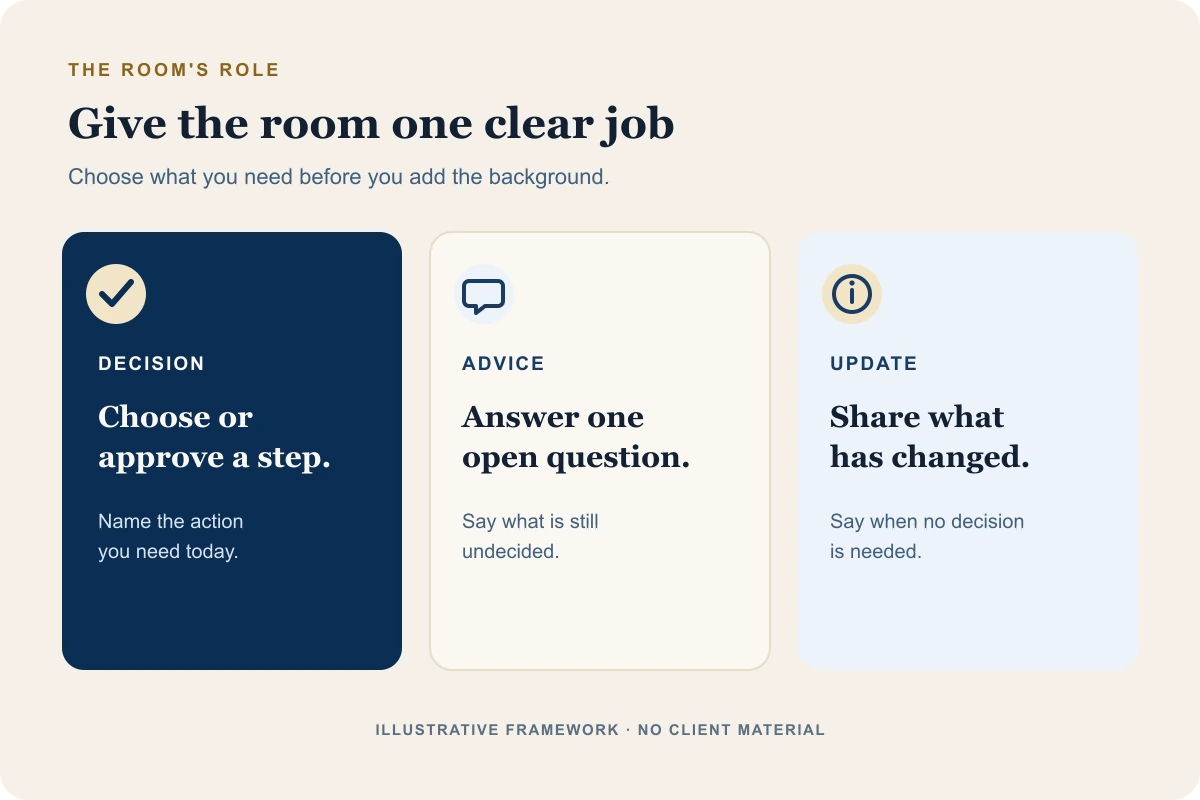
Illustrative example — not client work. These openings use the same placeholder situation but ask the room to do different things.
Before:
We have been reviewing [issue] and looking at a few options. I’ll cover the background and then we can discuss next steps.
That sounds organized. It still leaves the room wondering whether a decision is expected.
Decision:
Today, I recommend [option]. Could we agree to [specific next step]? I’ll explain the main reason and the one assumption we still need to check.
Advice:
We are not ready to choose an option. I need your view on [specific question] before I can recommend a next step.
Update:
No decision is needed today. I’ll explain [change] and what it means for [audience].
“Could we agree on [X] today?” is polite and specific. The room knows what its response needs to address.
Decide what goes first
Start with the room's role. Add the background people need to respond, then state the next step. That gives each part of the presentation a clear job.
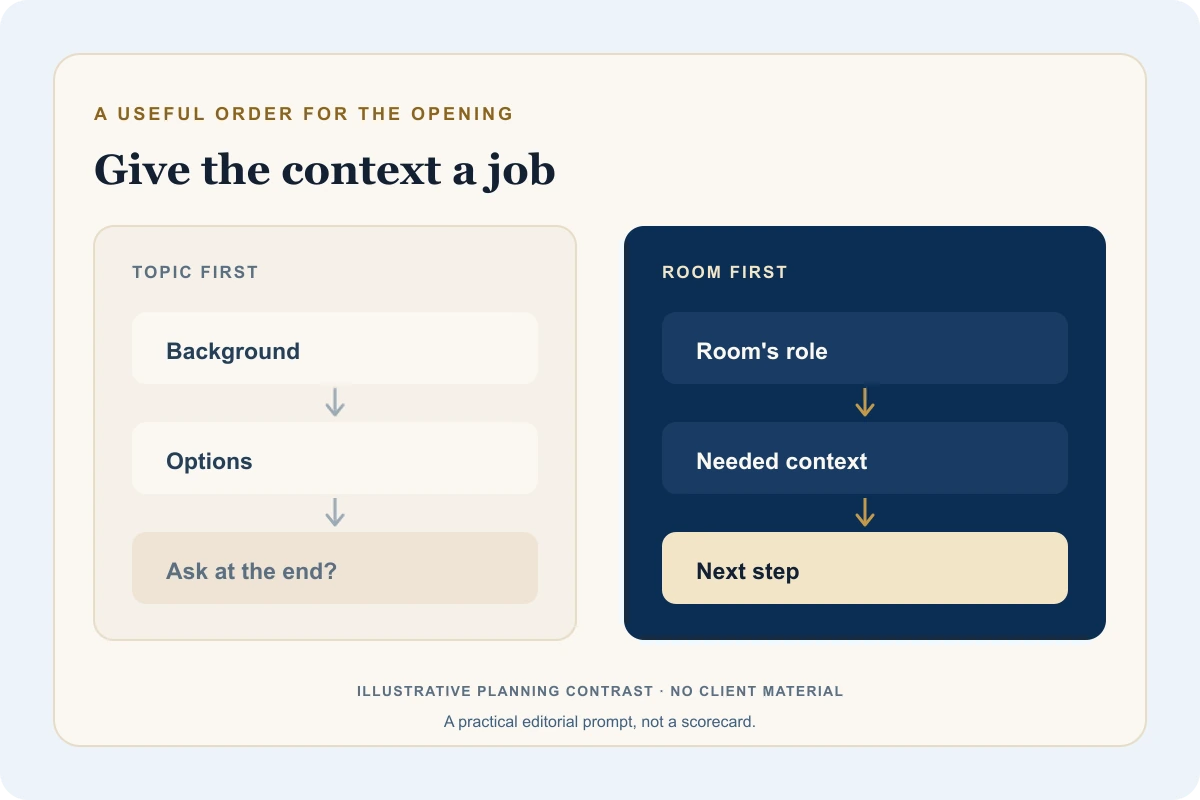
If you can't say what you need from the audience yet, settle the meeting's purpose before polishing the opening.
After the spoken opening is clear, check that the slides support it. This separate review looks at polished decks that still hide the decision.