When I review a polished proposal slide, I don’t start with the font or whether the icons line up. I find the commitment it asks the room to make: approve a rollout, fund a pilot, or agree to investigate. Then I ask: does the evidence earn that level of commitment?
A clean slide can still make a big commitment look like an obvious one.
Start with the commitment, then test the evidence
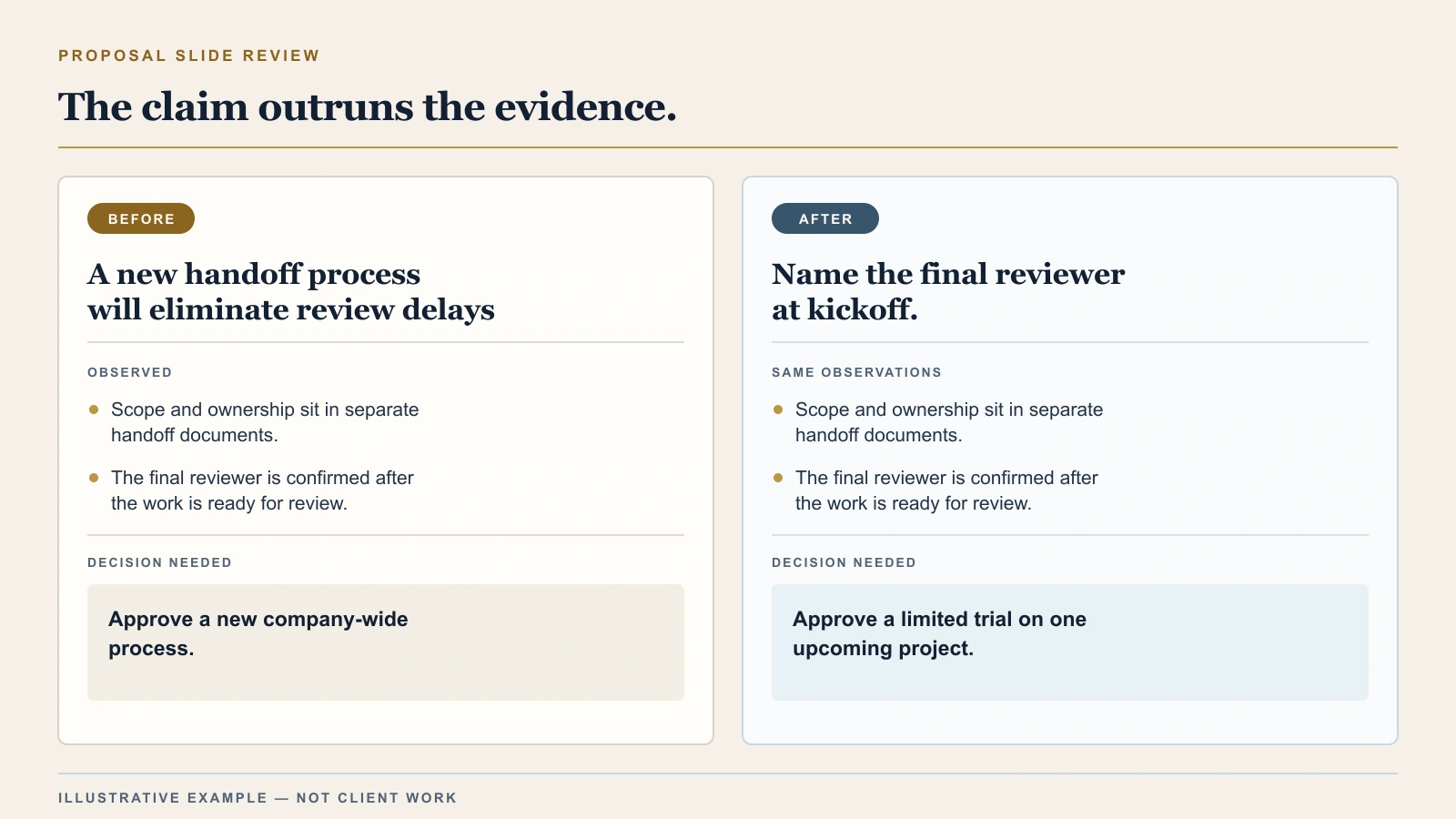
ILLUSTRATIVE EXAMPLE — NOT CLIENT WORK
Imagine a proposal slide with this headline:
A new handoff process will eliminate review delays
The evidence underneath says:
- Scope and ownership sit in separate handoff documents.
- The final reviewer is confirmed after the work is ready for review.
The slide then asks the audience to approve a new company-wide process.
Those observations point to a handoff problem worth examining. They don’t establish that a new process will eliminate delays or that a company-wide rollout is the right next move. I’d flag that gap before commenting on the slide’s spacing or color.
Separate what you know from what you infer
Write the slide’s evidence in three columns, even if only in your review notes:
- Observed: What has actually happened?
- Inferred: What do you think those observations mean?
- Unknown: What important question is still open?
In the example, separate documents and late reviewer assignment are observed. “A new process will eliminate delays” is a prediction. Whether a revised handoff would reduce delay, and whether every team needs the same change, remain unknown.
The proposal may still be worth testing. The test should match what the team knows.
Make the recommendation fit the evidence
With the same evidence, the slide could say:
Name the final reviewer at kickoff.
Decision needed: Approve a limited trial on one upcoming project.
This version asks the team to test one specific change without predicting the result. Use stronger evidence if you have it; otherwise, name what still needs checking.
Before polishing the slide, ask:
- What commitment am I asking the audience to make?
- Which parts of my case are observed, and which predict an outcome?
- What remains unknown?
- What is the smallest next step that would reduce that uncertainty?
Use these questions as a review prompt. The right next step depends on the evidence and the cost of being wrong. Make the size of the ask fit what is known before the slide leaves the team.
Once the ask fits the evidence, check whether the room knows its role. If it isn’t clear whether people should decide, advise, or hear an update, start with this check on the room’s job. If you are reviewing a data headline, check whether the chart supports the claim.
If you want an outside review of a proposal deck, request a Free Presentation Diagnostic. Ben reviews each submission himself and replies within 48 hours with 3–5 specific fixes and a recommended next step. It is a focused review, not a full rewrite or deck redesign.